Project Duration
12 Months
Services Provided
Research, UX/UI Design, Prototyping, User Testing
Introduction
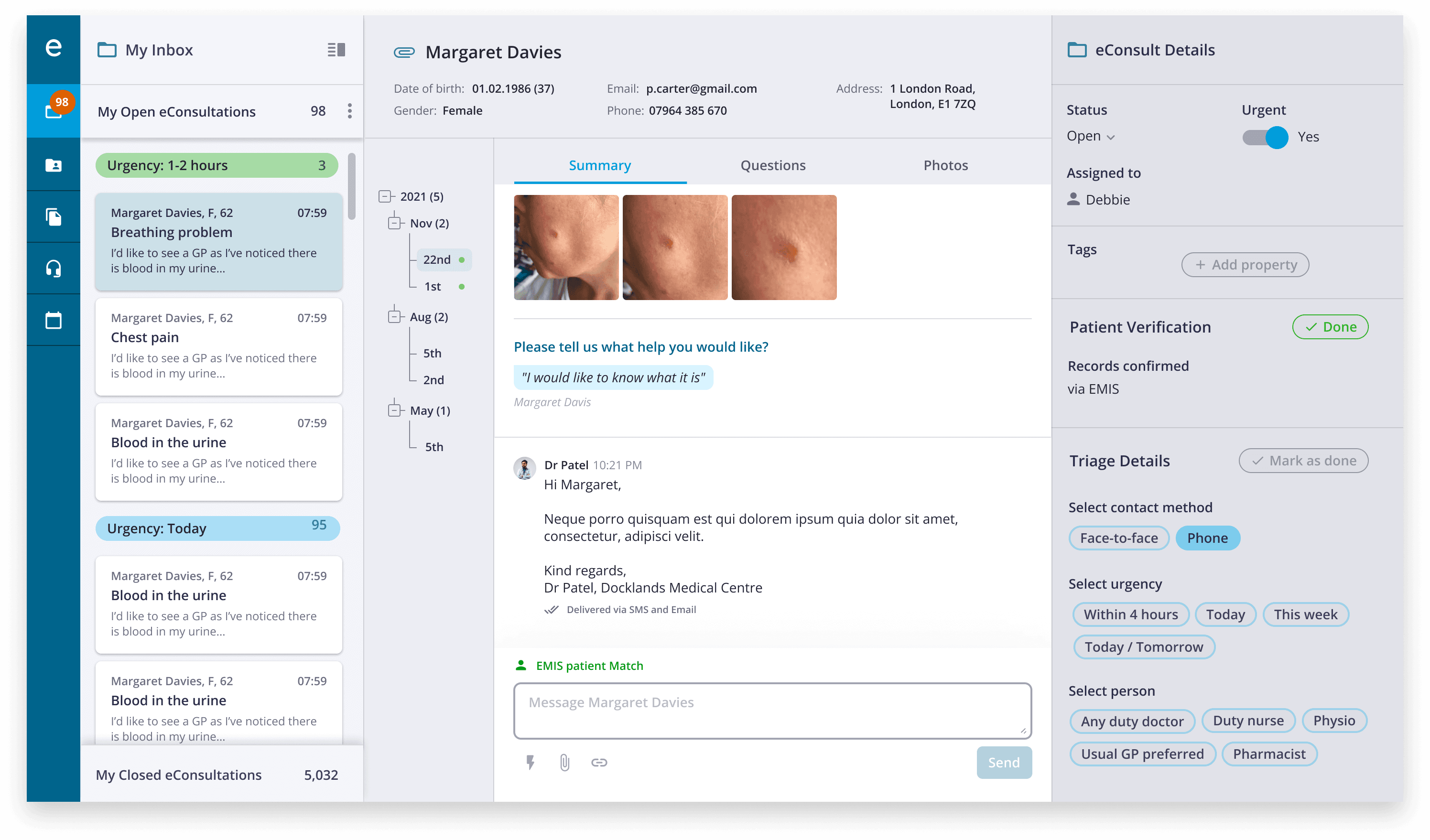
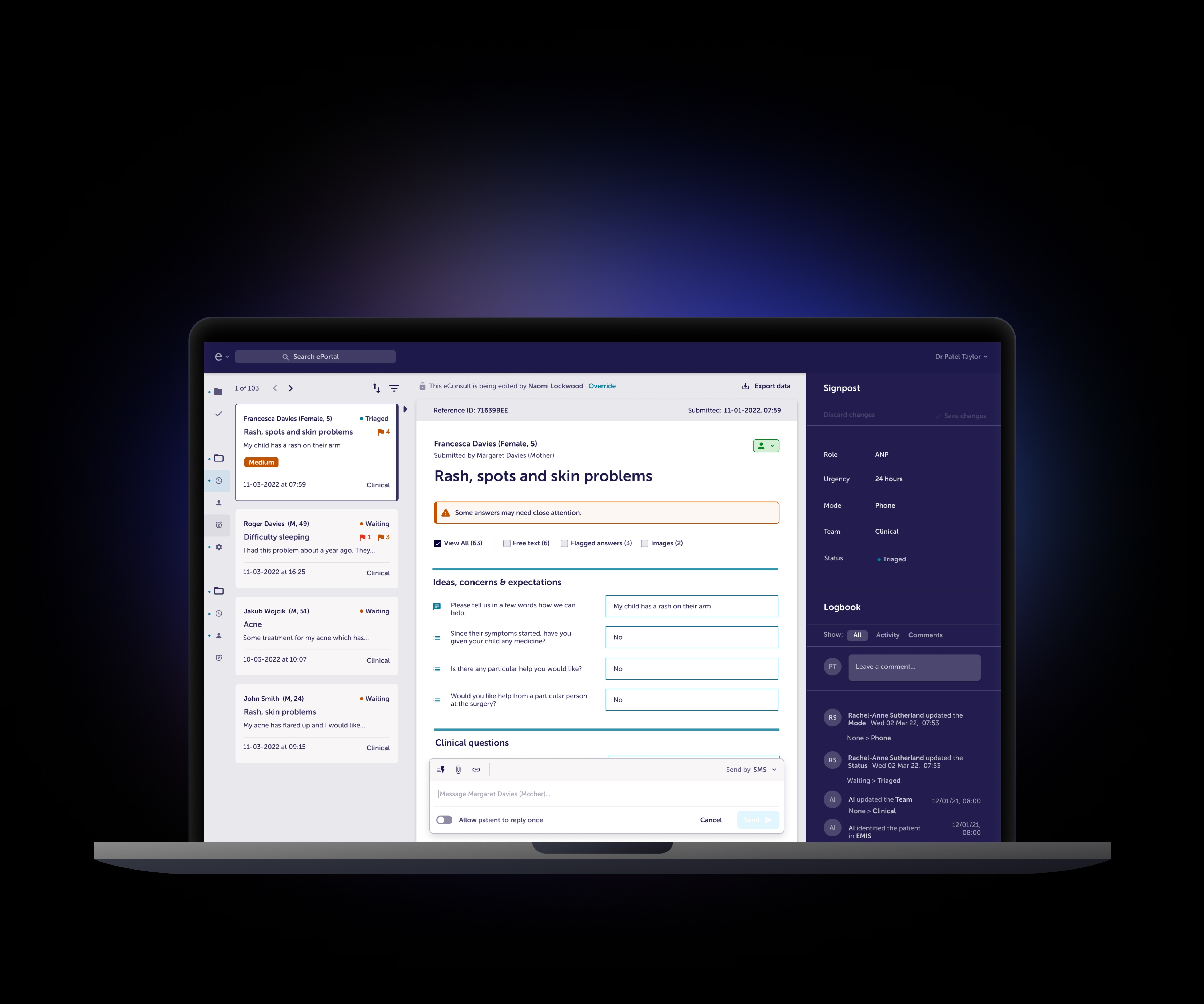
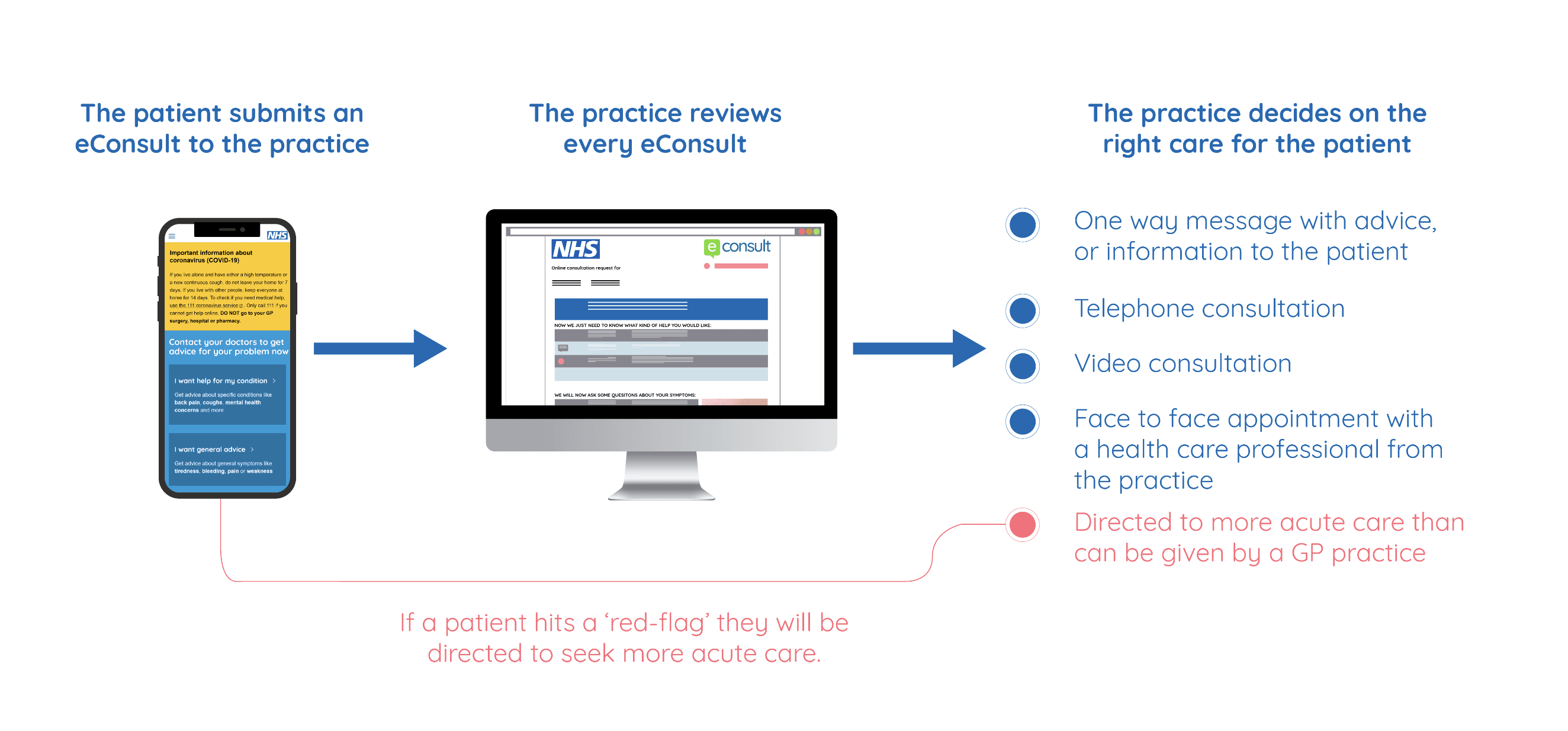
eConsult is a digital triage and online consultation platform that allows NHS GP practices to better understand the needs of their patients. By collecting rich, safe and structured patient information, patients can be better supported to get the right care at the right time and in the right place.
The Challenge
Faced with the challenge of transforming a traditional PDF-based consultation system into an interactive, efficient digital solution, the goal was to streamline patient consultations, enhance clinical decision-making, and revolutionise how healthcare professionals communicate with patients.
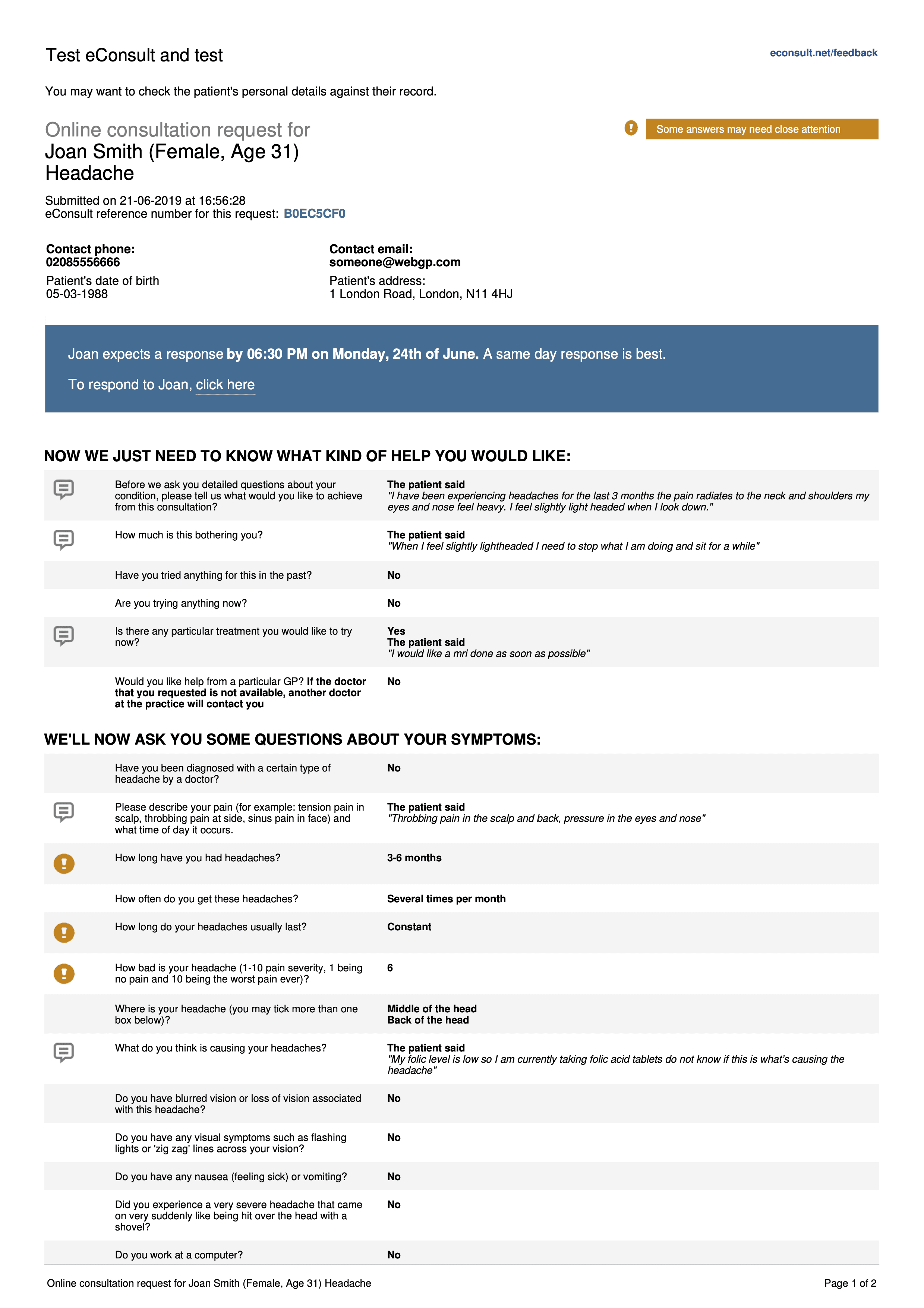
All the provided data in this eConsult is fictitious and is intended solely for design and testing purposes.
Initial Brainstorming and Ideation
Through user interviews and shadowing sessions, we gained deep insights into the daily challenges faced by healthcare providers. This informed our ideation phase, where we brainstormed solutions from both patient and clinician perspectives.
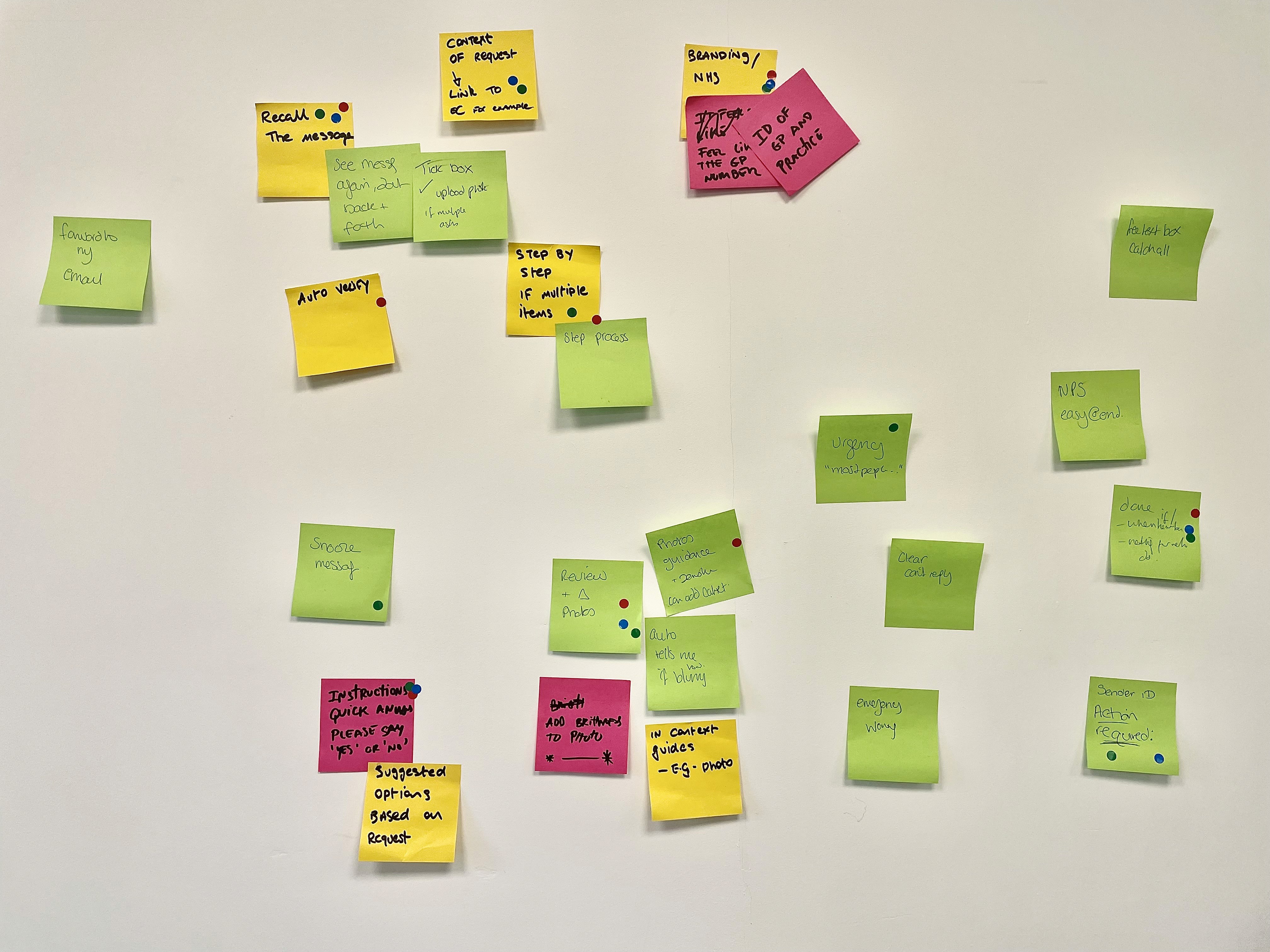
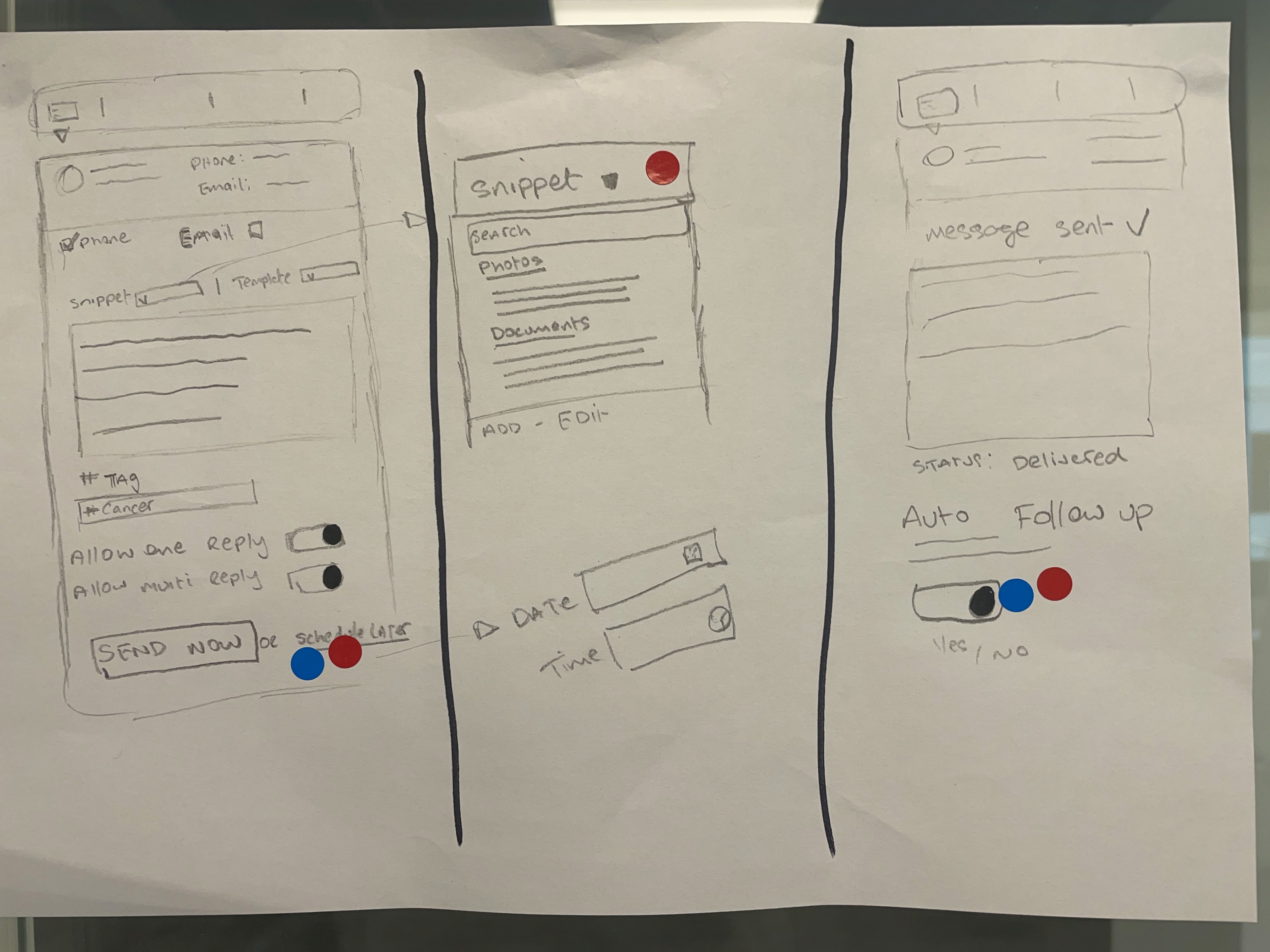
Our initial approach involved mind mapping and UX sketching to prioritise and refine features.
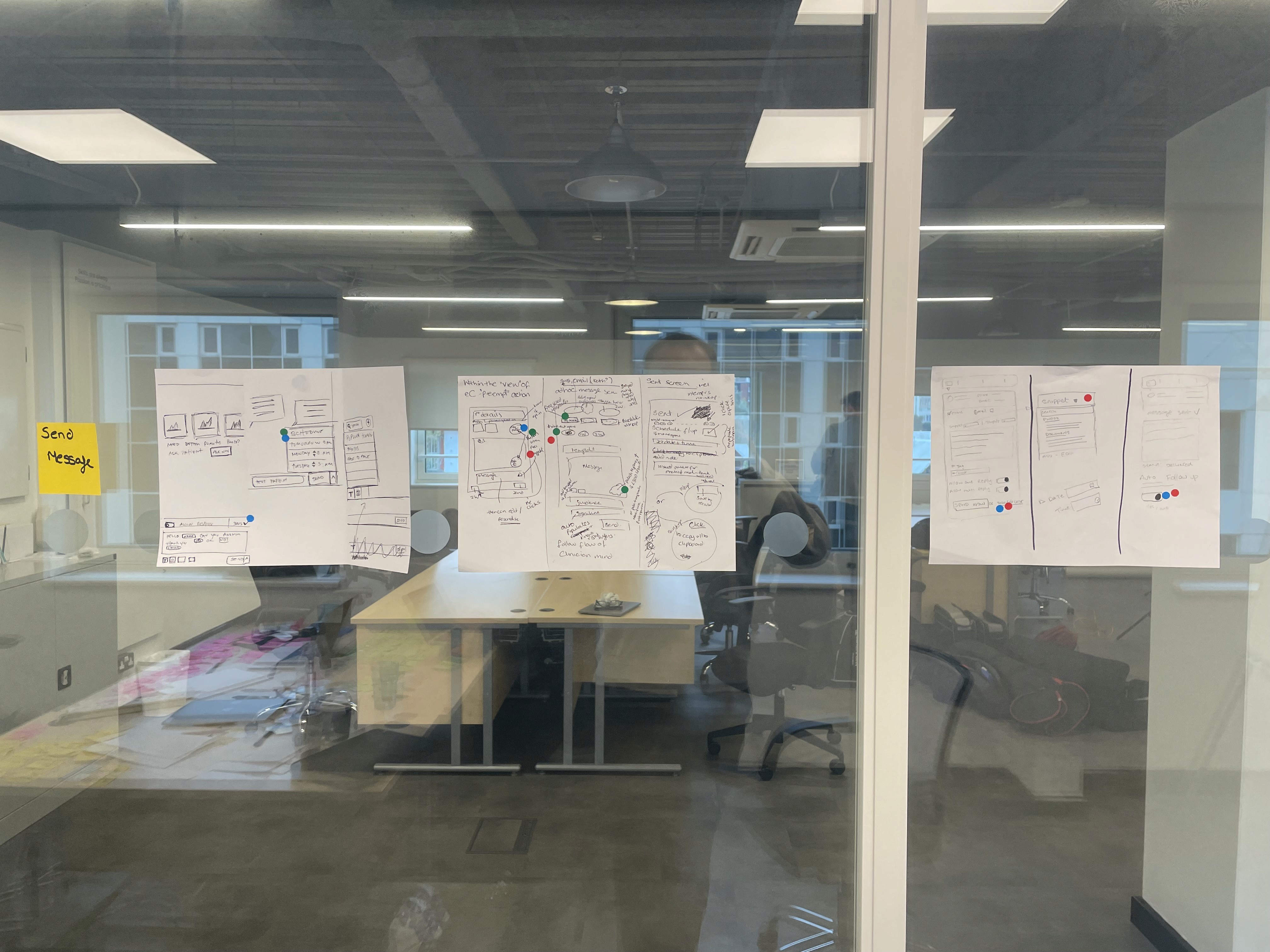
Discovering and Prioritising Design Opportunities
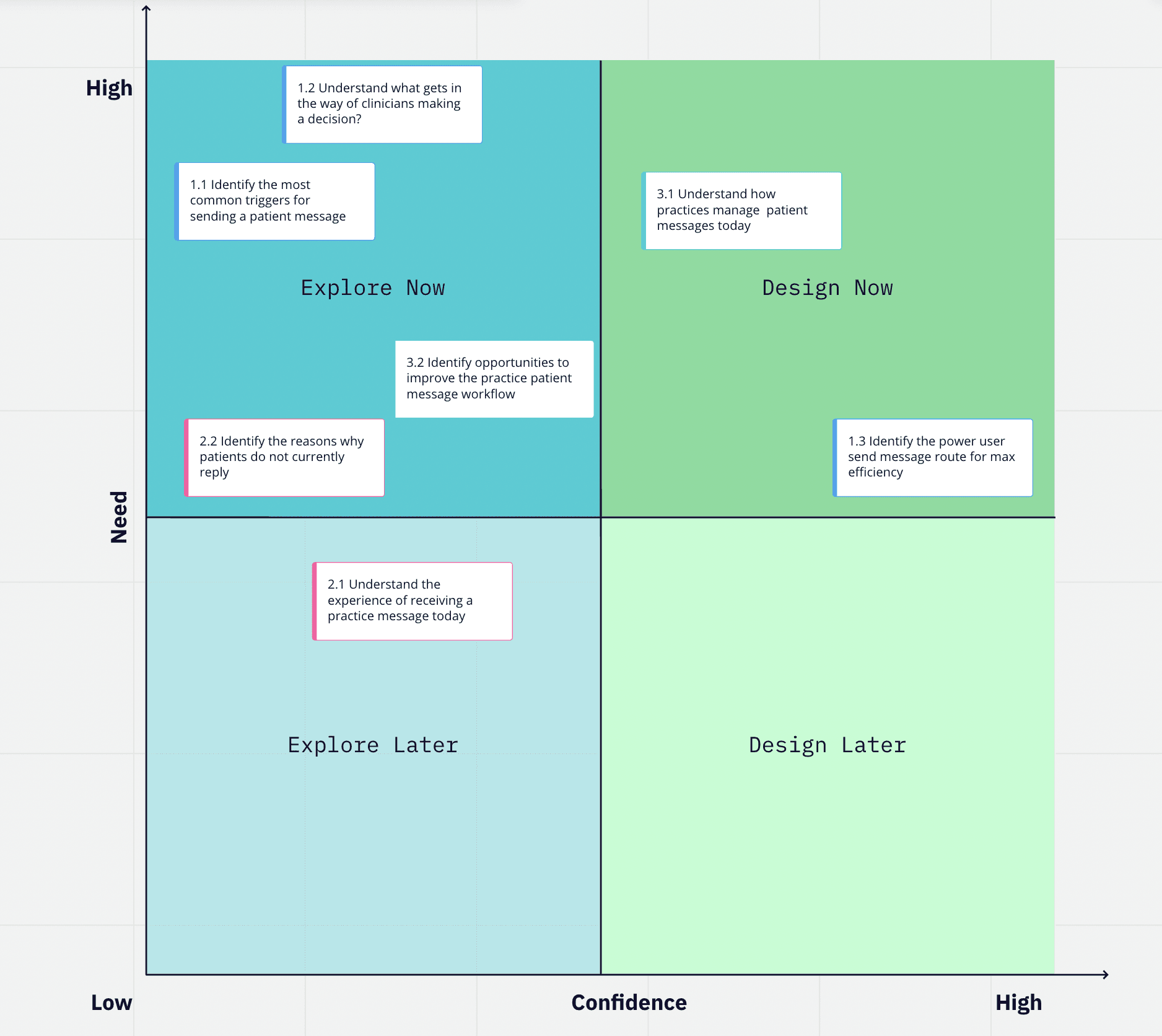
In our discovery phase, we identified key opportunities for improving the eConsult application. We prioritised enhancements using a need-confidence matrix, focusing on the introduction of a two-way messaging system. This feature aimed to automate patient-provider communication, reducing the need for time-consuming emails and calls.
Feature Mapping
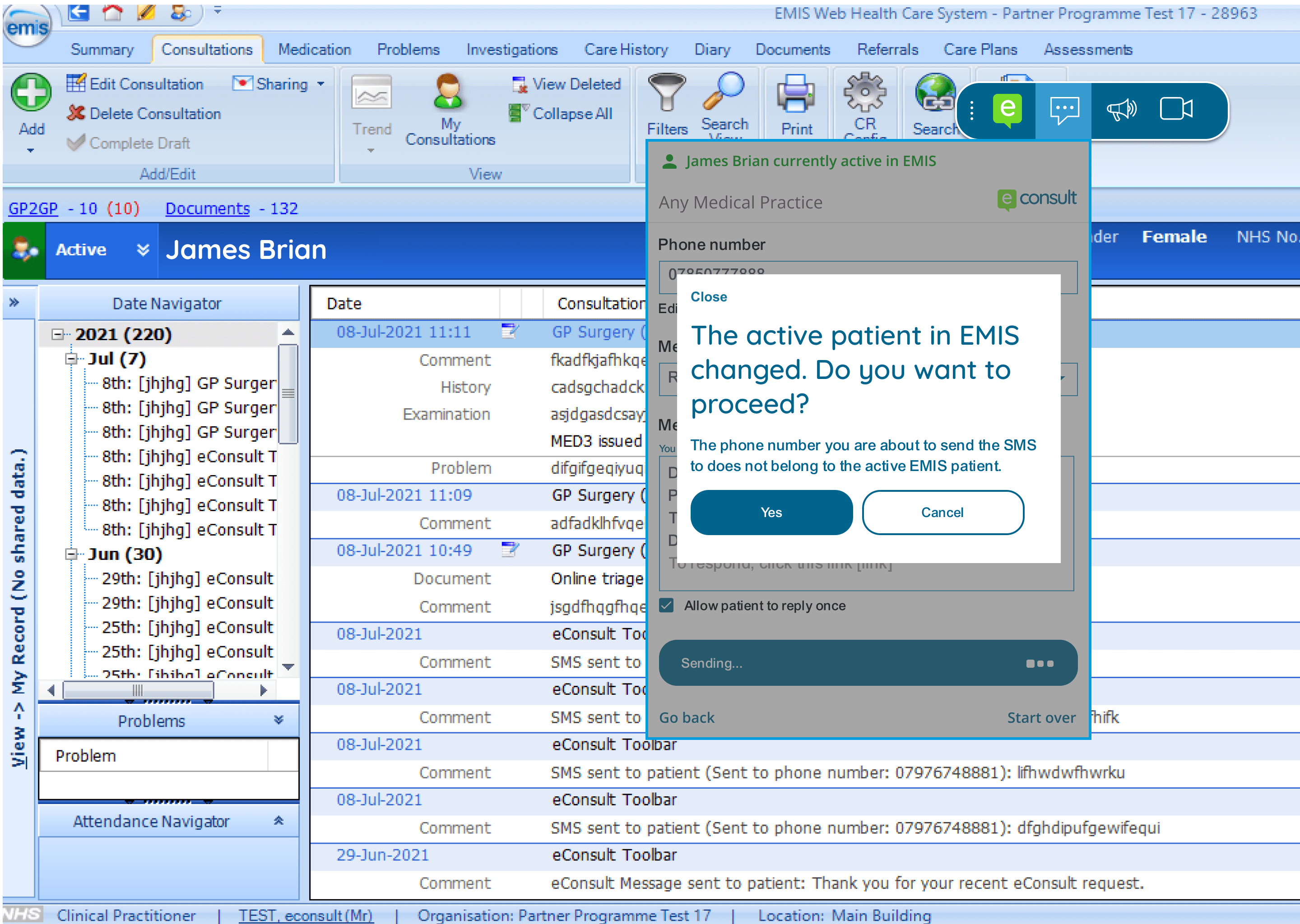
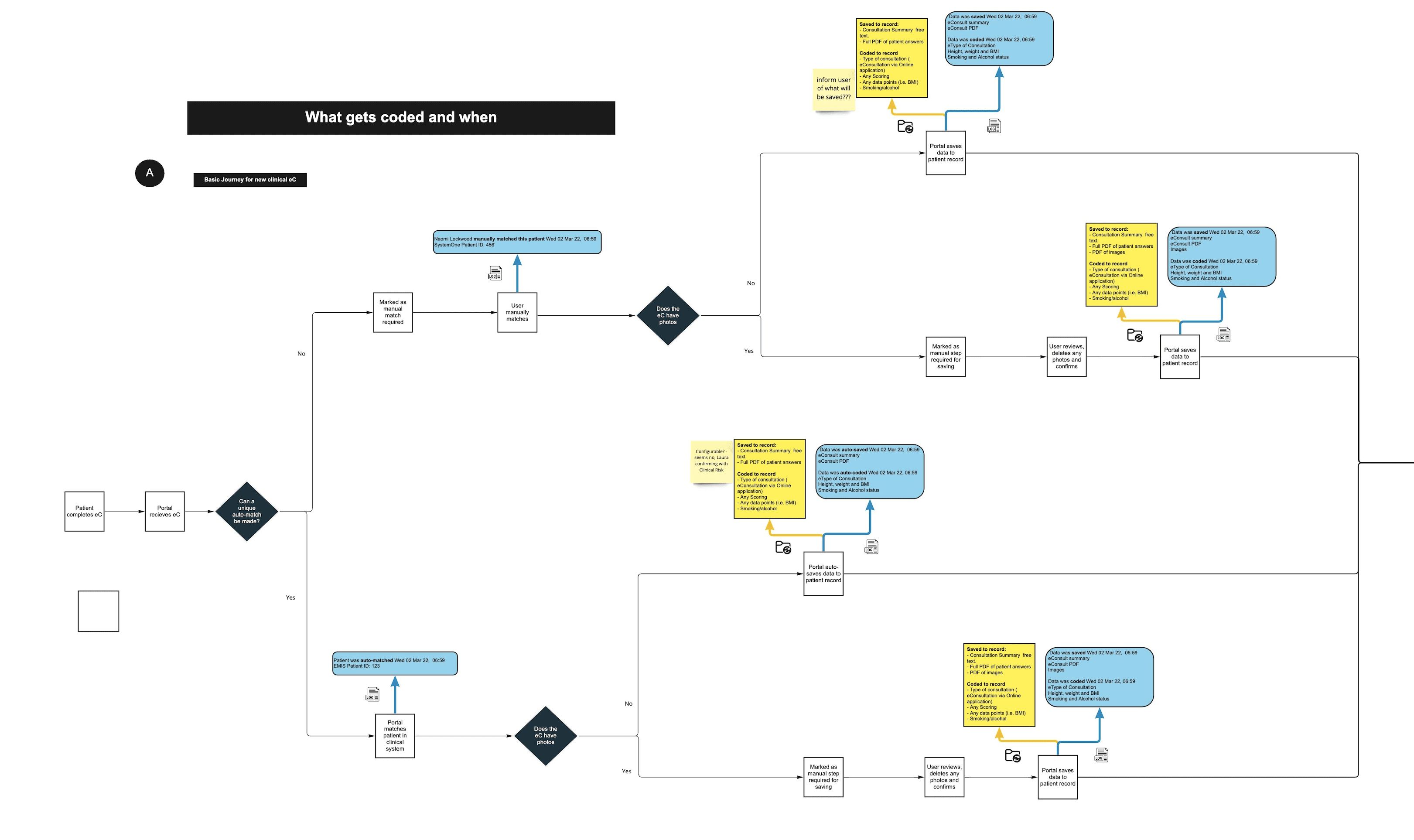
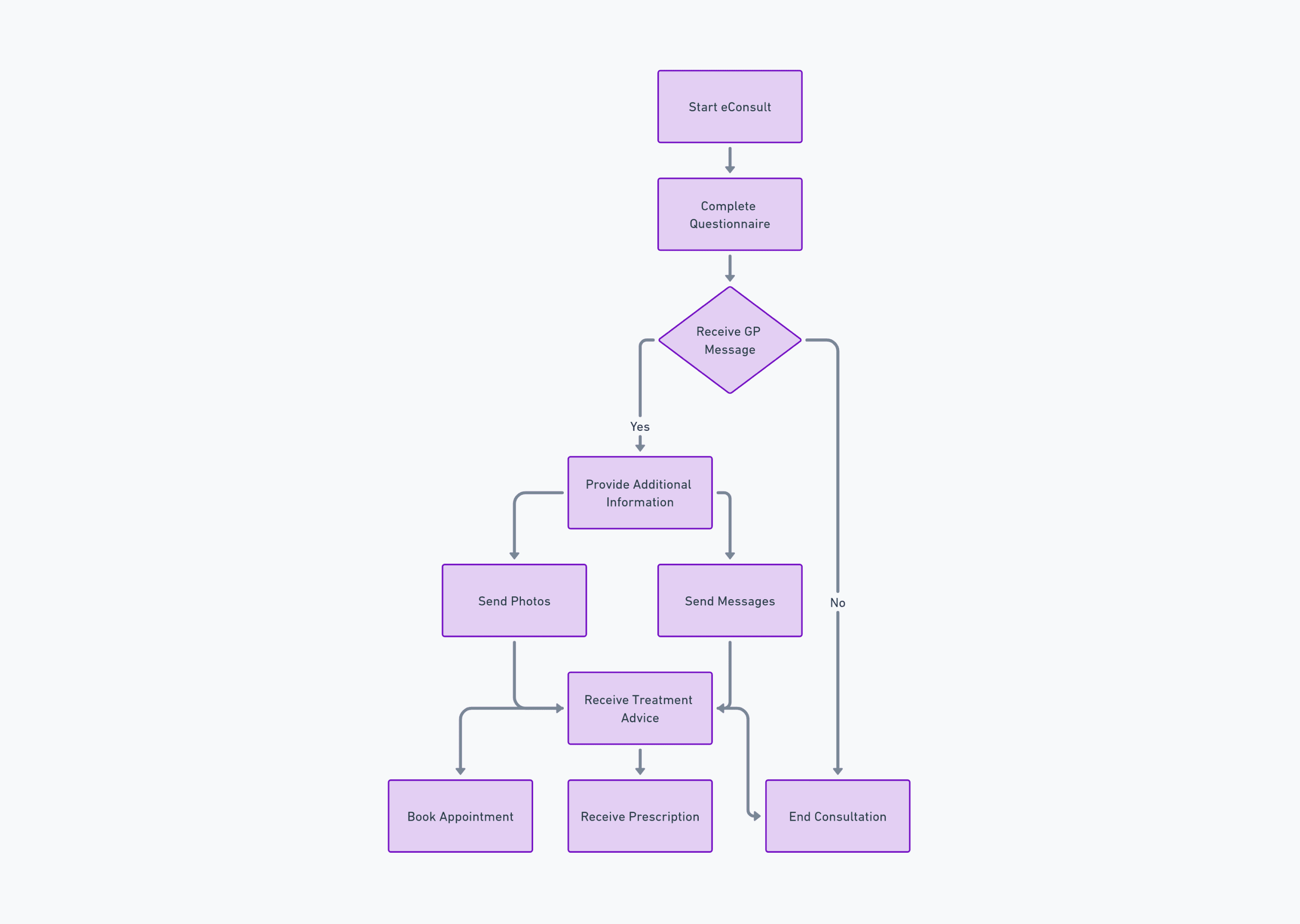
There are occasions when the GP needs more information from the patient after they submit their eConsult. This was when we discovered we needed a feature to “Allow the patient to reply once”.
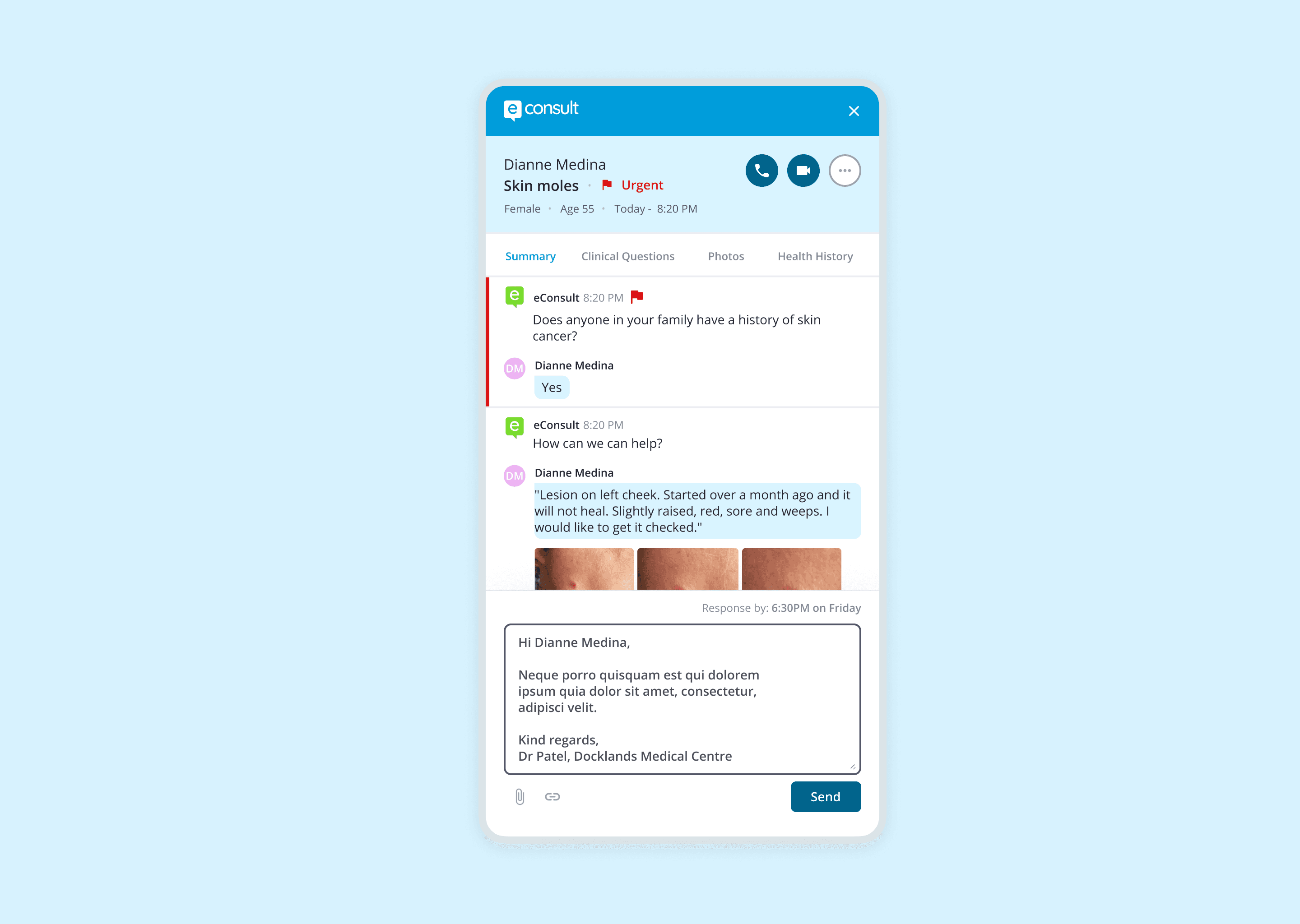
There was no easy way to communicate with the patient other than sending an email or calling them, which was time-consuming. To address this issue, we aim to introduce a new feature called "Two-Way Messaging" that would automate the process and make it more efficient.
User Testing (Patient)
Our user testing involved evaluating two prototype pathways to simplify patient-provider interactions.
Prototype Route A
We asked the right questions to get accurate patient information, including high-quality photos whenever required. We aimed to make the process as simple as possible so that our GPs wouldn’t have to request additional information once the eConsult was submitted.
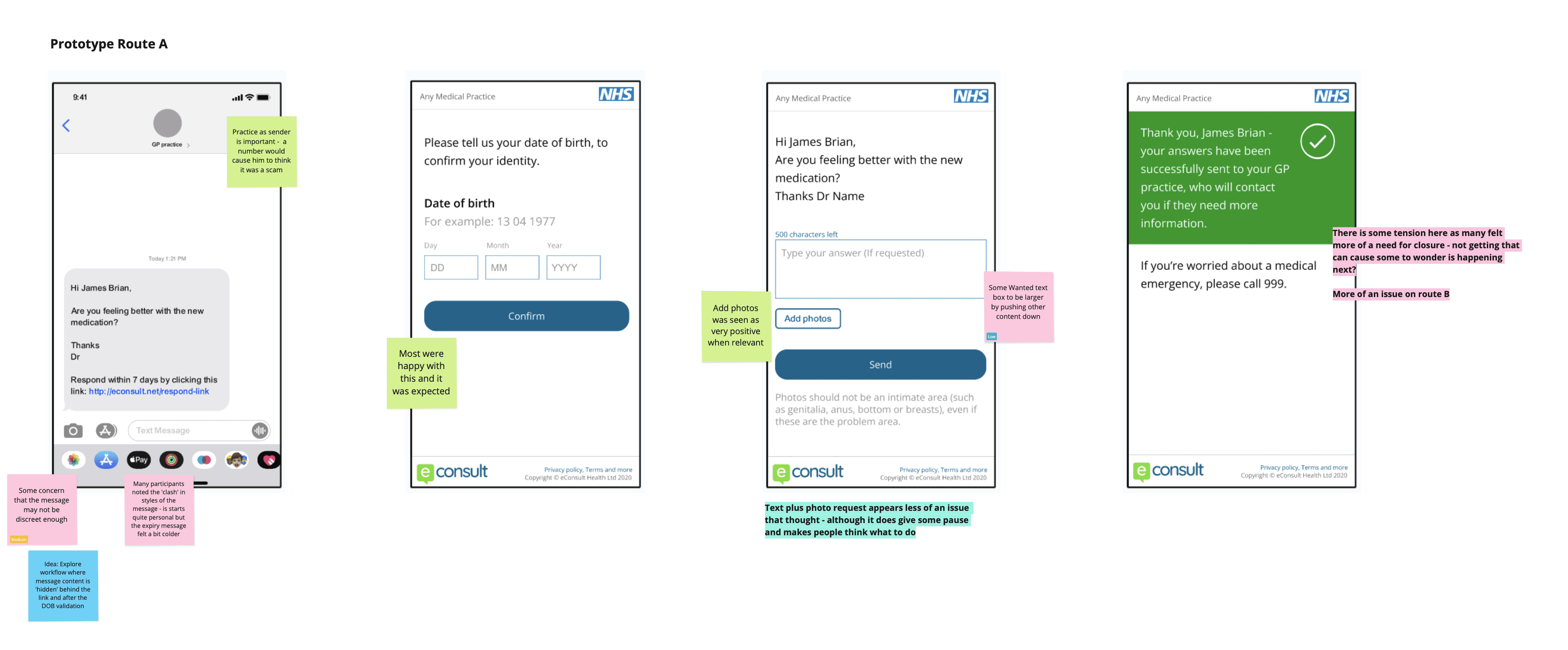
Route A received positive feedback for its clarity and security but lacked detailed photo submission guidance.
Prototype Route B
The submission of poor quality images by patients was causing inefficiencies and diagnostic challenges for GPs, which could potentially slow down the patient treatment process.
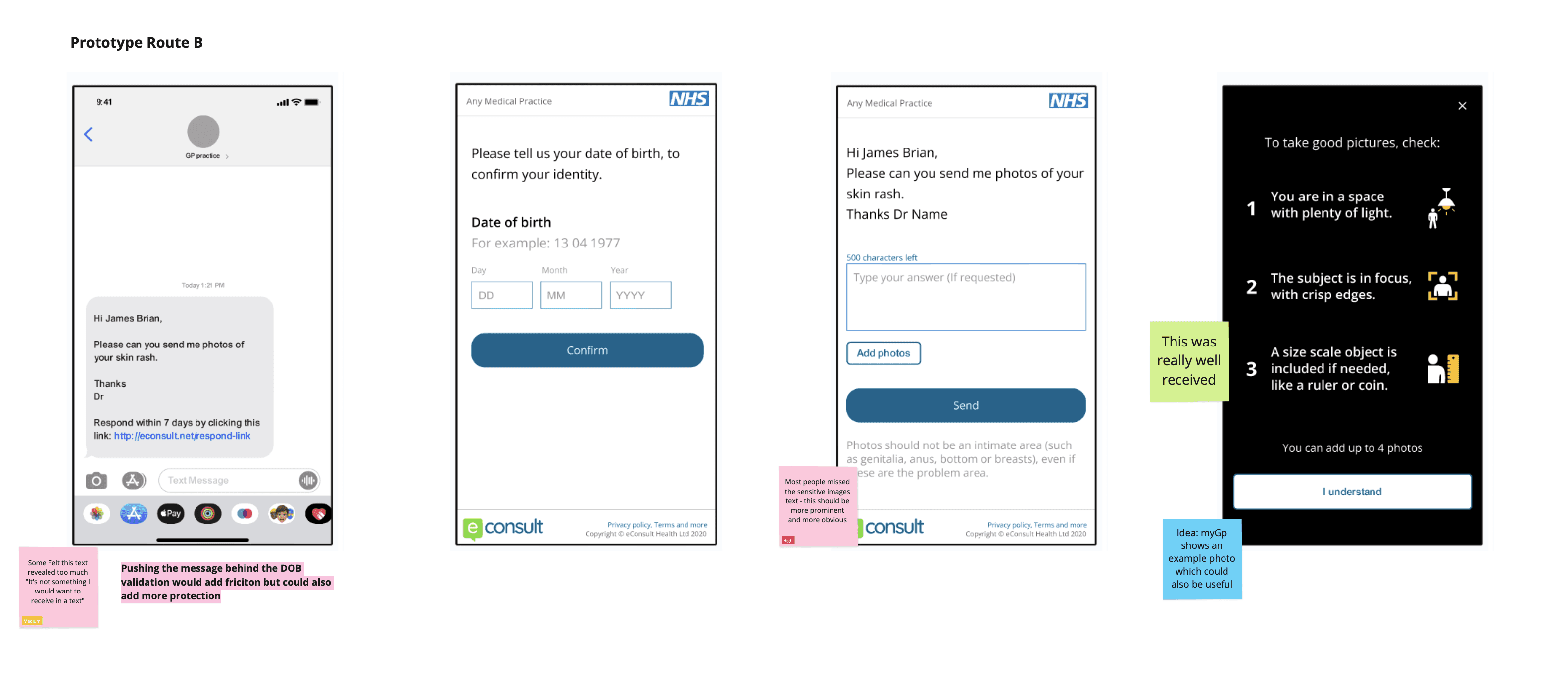
Improved photo submission but faced challenges in identity confirmation.
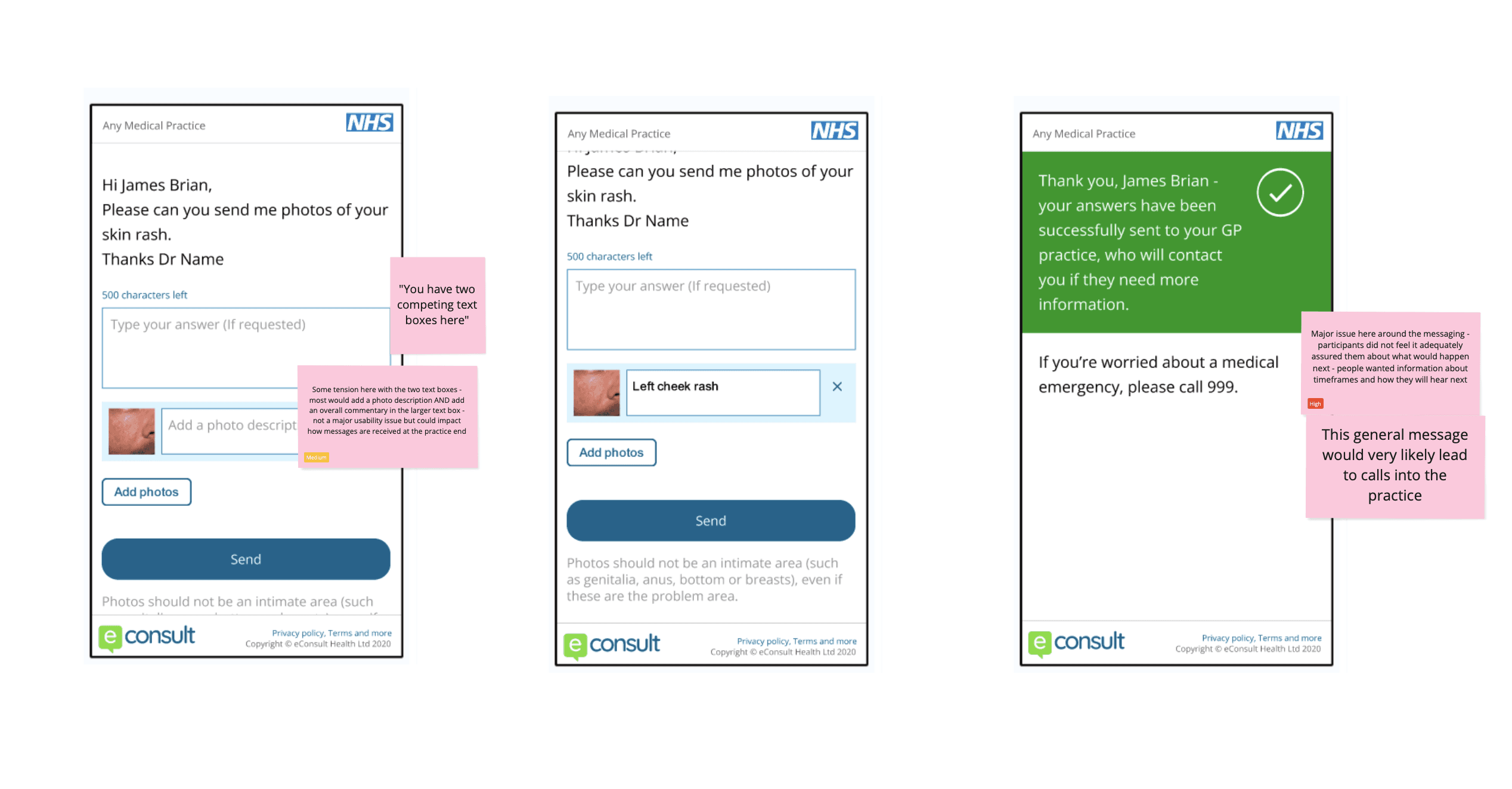
We refined our designs based on this feedback to enhance user compliance and streamline the submission process.
User Testing (GP)
During the testing phase our focus was to clarify key functionalities and enhancements for the platform's interface. The objective was to ask the right questions to help us promote efficient and error-free communication between GPs and patients.
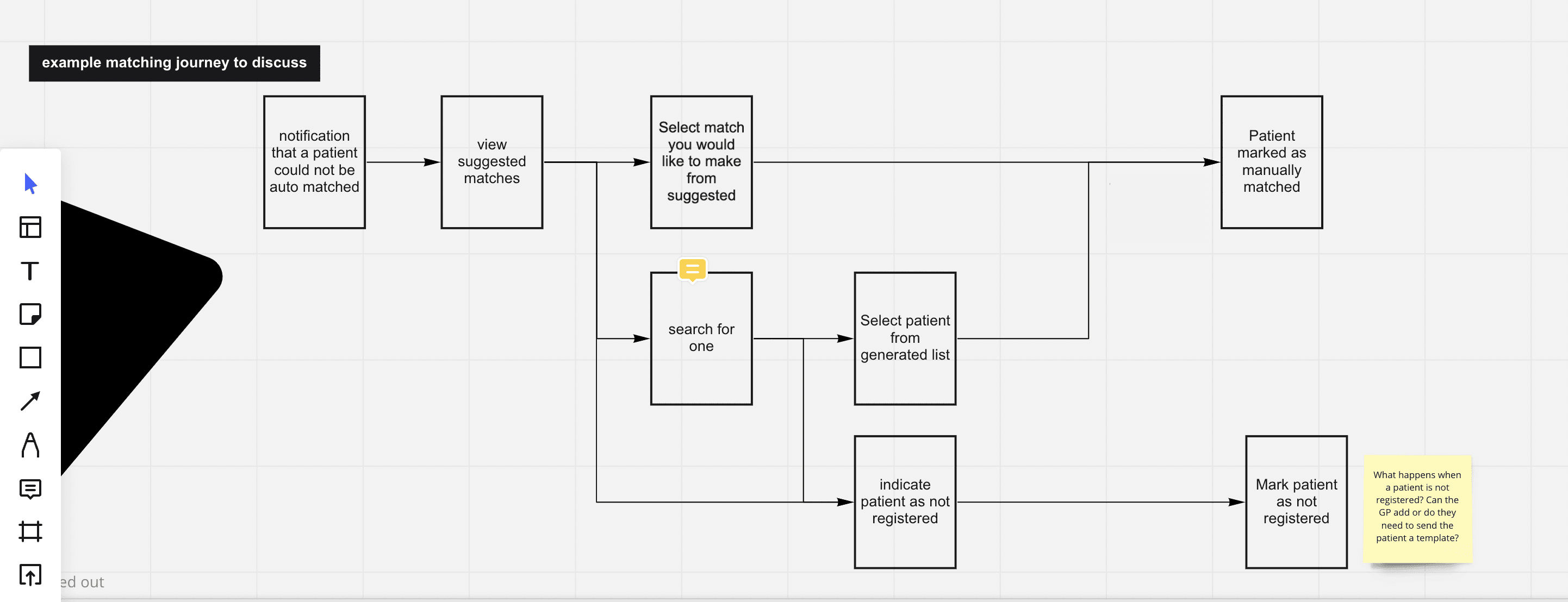
A collaborative Miro board served as the digital canvas for our discovery phase. We identified, categorised, and prioritised potential features and improvements crucial to the GP experience based on the feedback from interviews from internal and external Gps.
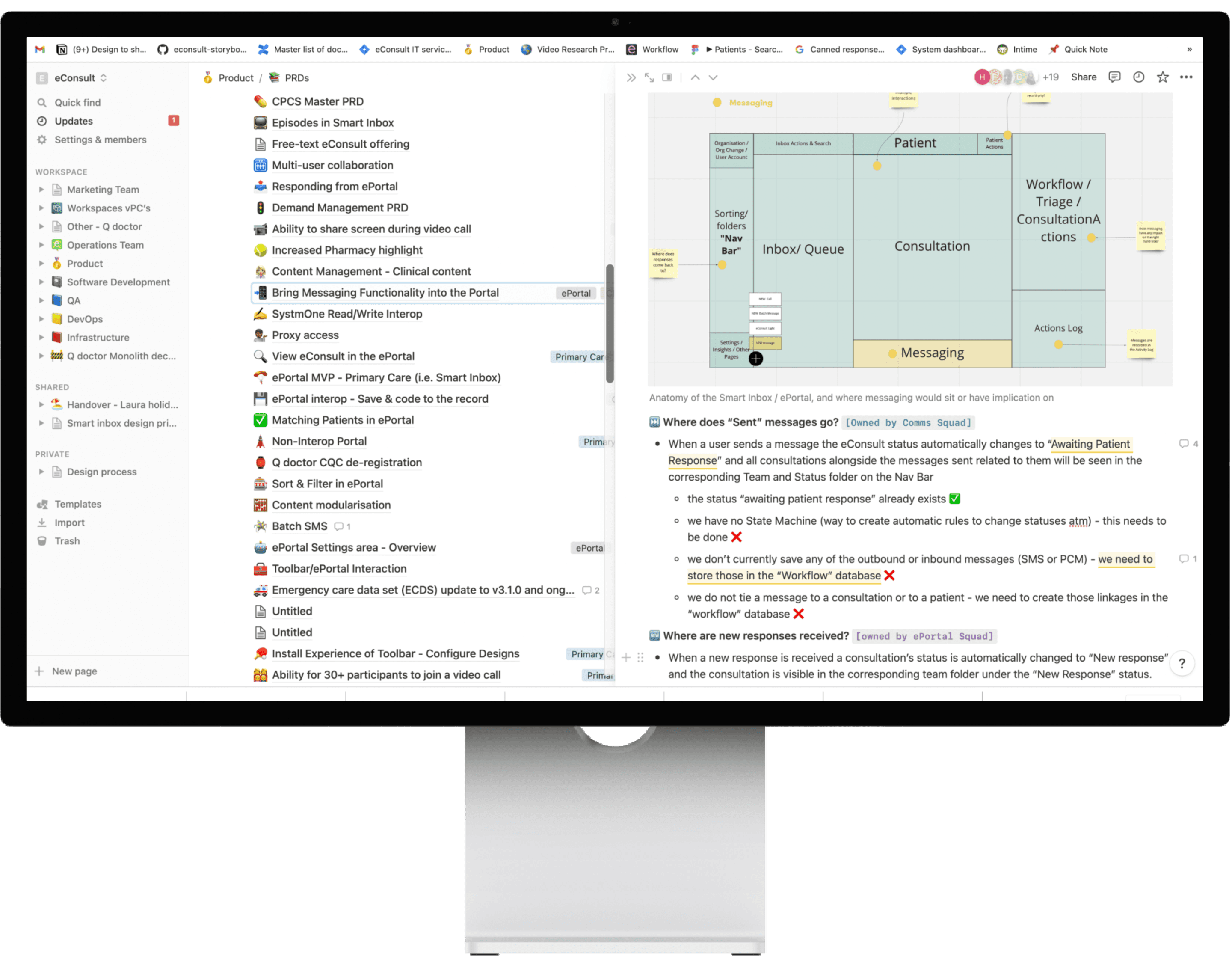
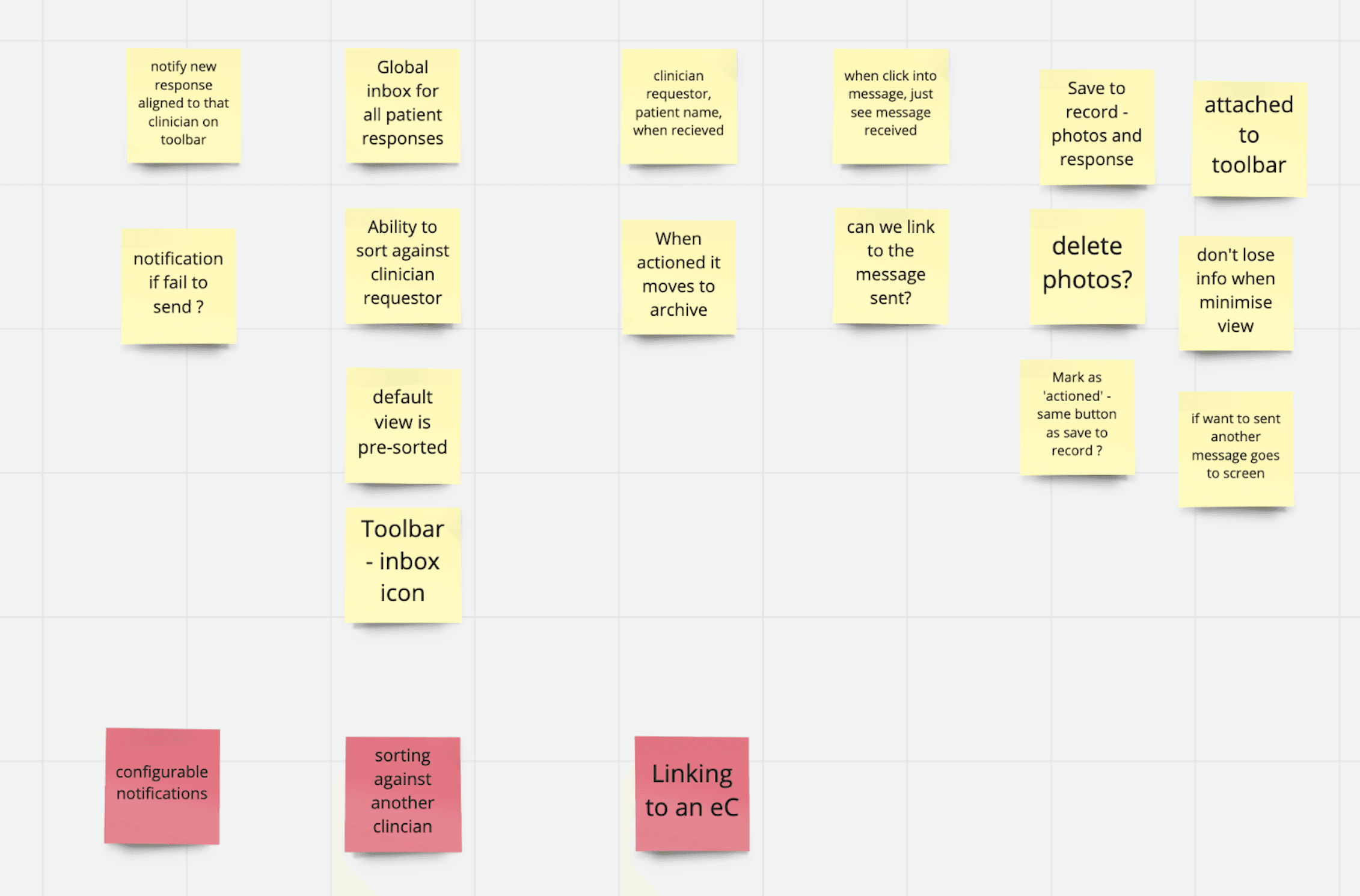
Key Insights:
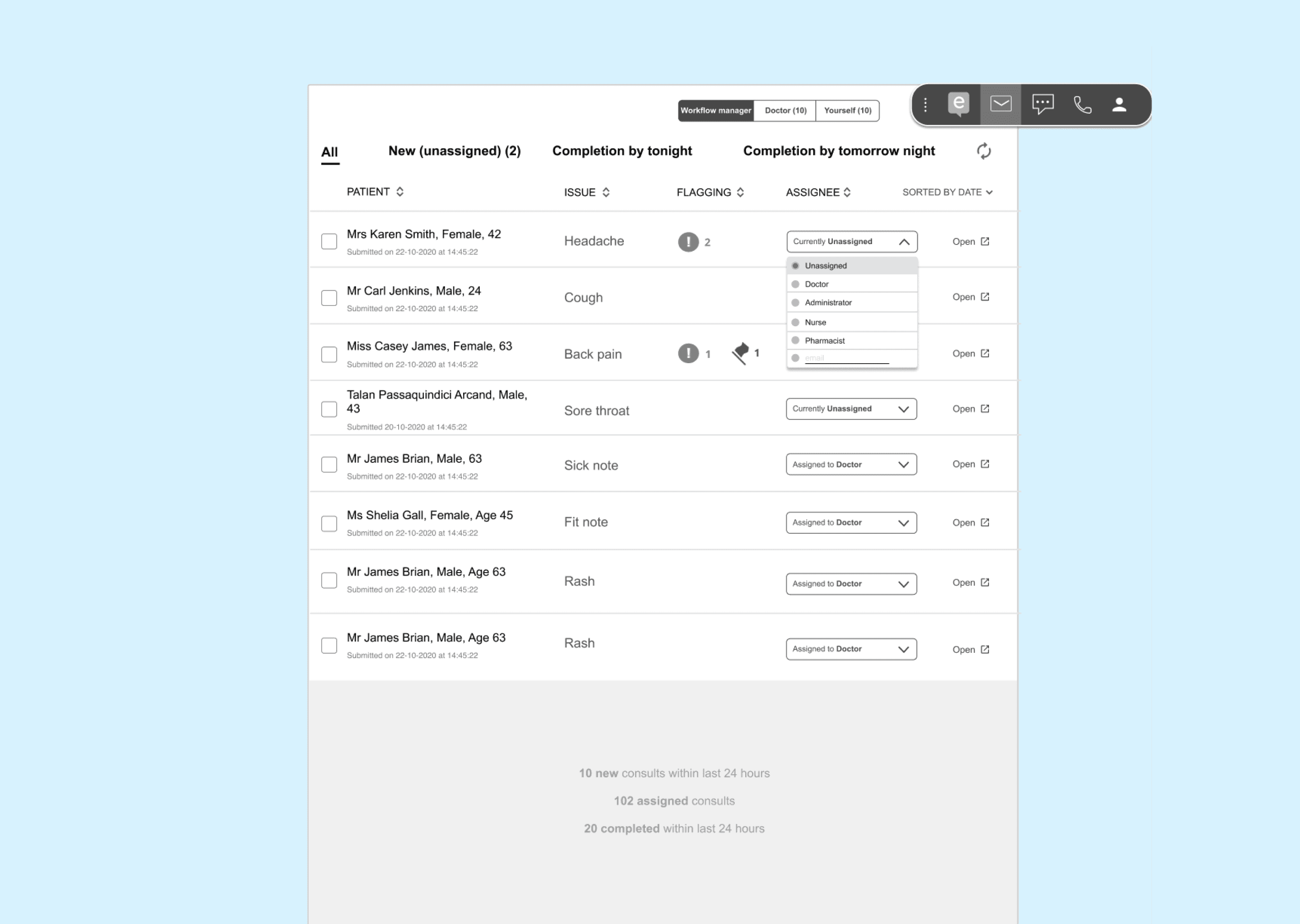
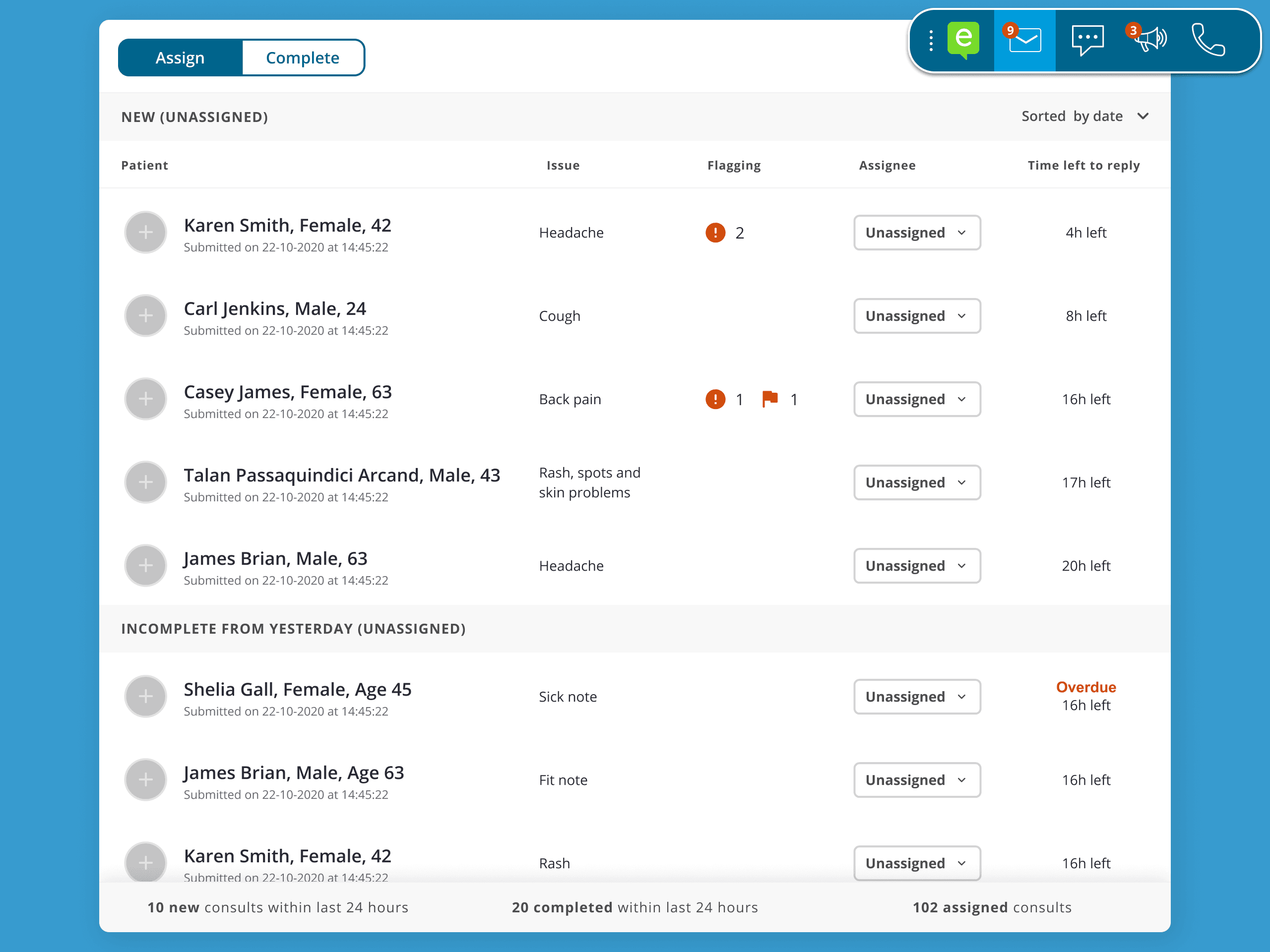
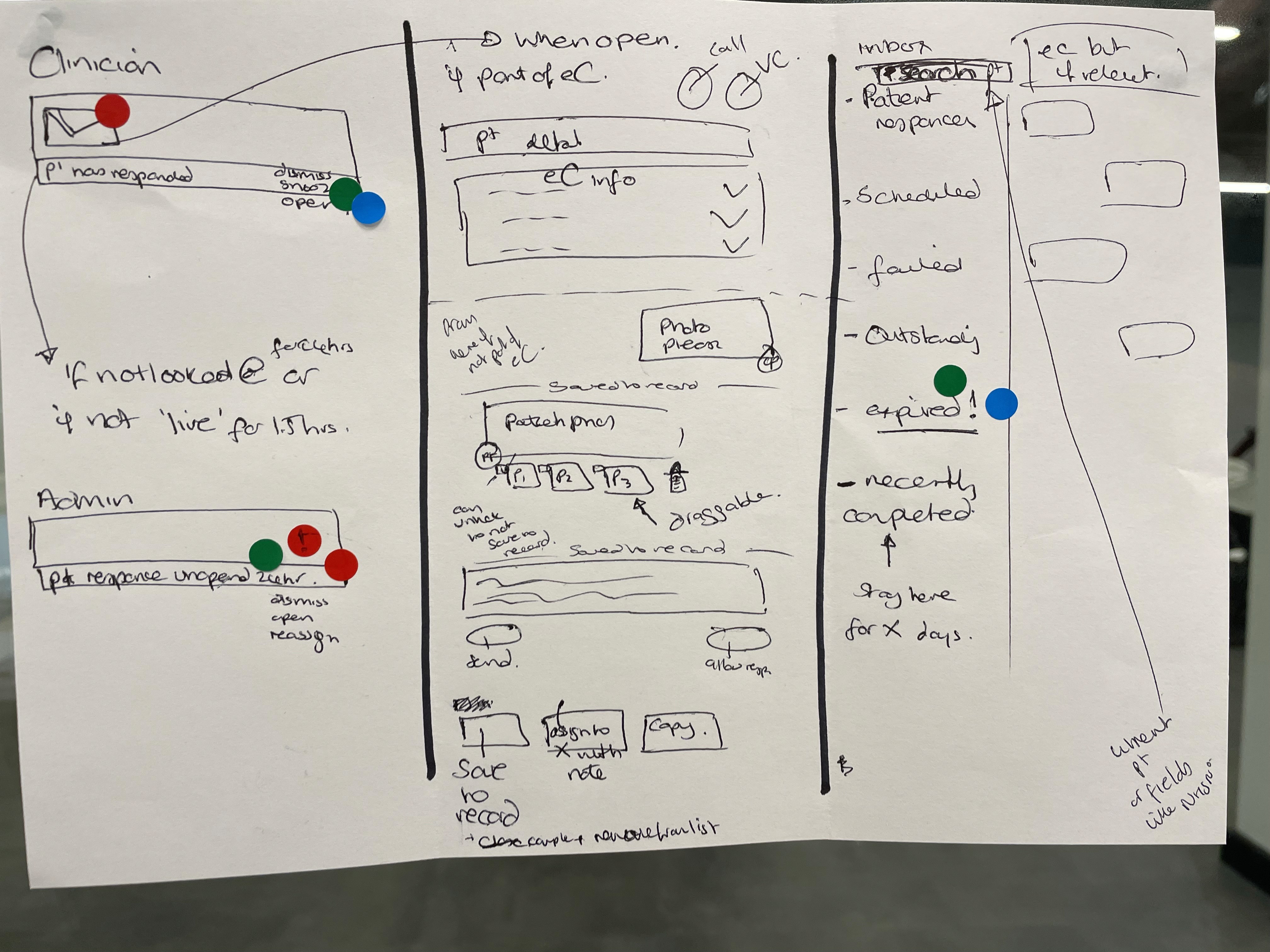
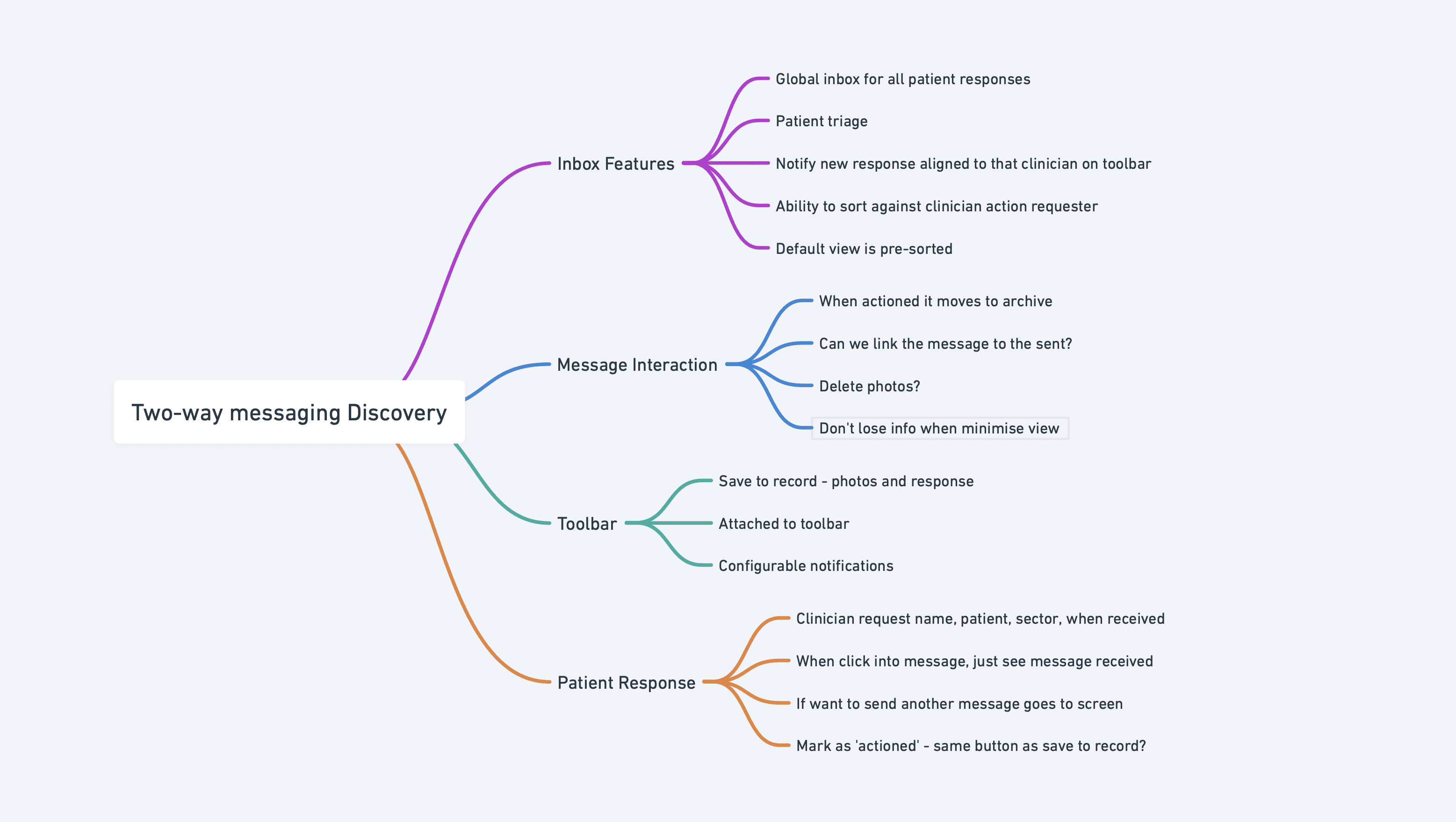
Inbox Customisation: We pinpointed the need for a global inbox capable of consolidating all patient responses, equipped with sorting capabilities and patient triage functions to streamline the GP's workflow.
Notification System: The importance of a reliable notification system was emphasised, including alerts for new responses and failsafe prompts for unsent messages.
Message Management: We considered the necessity of linking incoming messages to previously sent ones for context, and explored the potential to mark messages as 'actioned' similarly to how photos are saved to patient records.